
Next day finished our journey over fine roads. Generally through wide prairies. Some of the prairies are eight miles across and extended as far as the eye could see in length. No sight can be more magnificent than one of the boundless prairies, covered with grass, weeds, flowers and sometimes clumps of trees. They abound with larks and prairie hens. Crossed Fox River. Encamped at Muddy fork of Little Wabash. A deep dirty little stream which we were compelled to cross on one of the worst bridges I ever saw, for which we were charged an extortionate toll, 87-1/2 cents.*
No sight can be more magnificent… These are the words of William Campbell writing with so much emotion, about the great plains the caravan is crossing. Campbell was a 24 year-old well-educated and well traveled young man, a lawyer, leading fifty people to Missouri from Virginia. He has amazed at the new landscape they encountered.
Like his father and mother before him, the enslaved Archer had never been away from Rockbridge County Virginia where he had been born in 1806. He had never seen anything like what he’d encountered these past six weeks. The caravan had entered Illinois, where the first state Constitution in 1818 stated that while slavery shall not be “thereafter introduced” it was still to be tolerated. Illinois was a ‘free state’ all the same, and this was something that Archer would always remember. He also thought No sight can be more magnificent…
While the Illinois state constitution did not have a clause forbidding an amendment to allow slavery, religions leaders like John Mason Peck, and voters had rejected a proposal for a new constitutional convention that could have made slavery legal, five years before, in 1824. Despite these laws tolerating de facto slavery, in a series of legal decisions the Illinois Supreme Court developed a jurisprudence to gradually emancipate the enslaved people of Illinois. The justices decided that in order for a contract of servitude to be valid, both parties must be in agreement and sign it, and it was registered within 30 days of entering the state. In one of the predecessors of the Dred Scott decision, Moore v. People, 55 U.S. 13 (1852), the U.S. Supreme Court upheld a conviction for harboring a fugitive slave from Missouri, as had the Illinois Supreme Court a few years earlier.
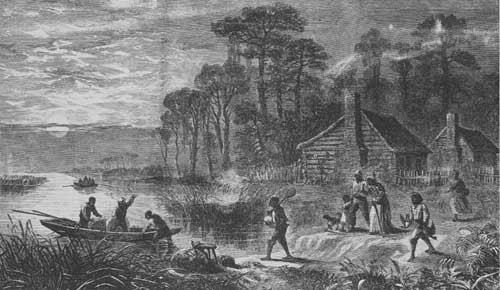
Slave catchers from Missouri would travel to Illinois either to recapture escaped slaves, or kidnap free blacks for sale into slavery, particularly since Illinois’ legislature tightened the Black Code to state that recaptured escaped slaves would have time added to their indentures. A law barred blacks from being witnesses in court cases against whites, then two years later barred blacks from suing for their freedom. Illinois residents participated in the underground railroad for fugitive slaves seeking freedom, with major routes beginning in the Mississippi River towns of Quincy , Alton, Chester in Illinois and Hannibal, St. Charles, and Cape Girardeau in Missouri. Other routes ran from Cairo, up to Springfield where they would go up the Wabash River.

*This is the journal of William Campbell (1805-1849) leading four families from Lexington, in Rockbridge County, Virginia to St. Charles County Missouri, written in 1829. There are 55 people in this caravan, 25 of which are enslaved. Among the enslaved is Archer Alexander.\This journal is located in the collections of the Leyburn Library, Special Collections and Archives, located at the Washington and Lee University, in Lexington, Virginia, and for which we are deeply indebted to Lisa McCown. Editor and author is Dorris Keeven-Franke. The next journal entry is September 30, 1829 https://archeralexander.blog/2023/09/30/30-september-1829-thirty-fifth-entry/
TODAY
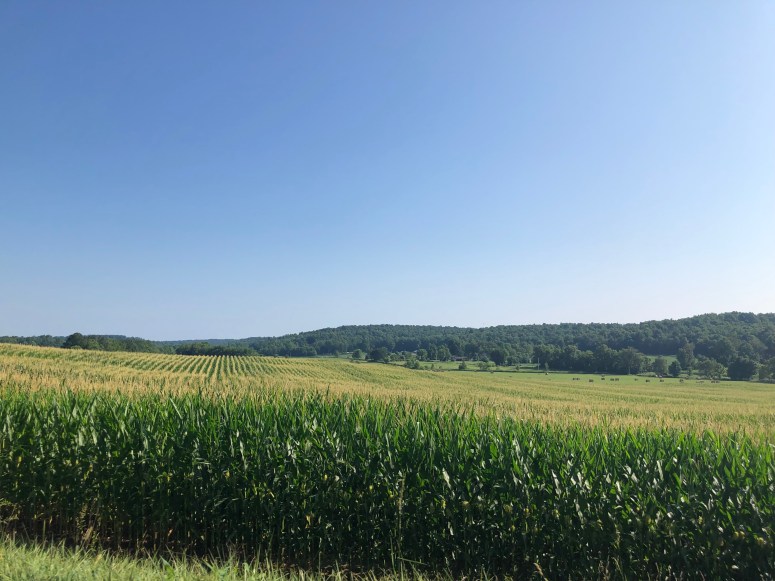
The Little Wabash River is a 240-mile-long tributary of the Wabash River in east-central and southeastern Illinois in the United States. Via the Wabash and Ohio rivers, it is part of the watershed of the Mississippi River. It is the third largest tributary after the White River and the Embarras River.


 ARCHER ALEXANDER
Leave a comment