By Dorris Keeven-Franke
I fell down a rabbit hole, chasing the truth. When posed with what should have been a simple question, one that thousands of family historians have screamed into the wilderness of records, the everlasting “do you know? Where he’s buried?”. They thought I knew. I thought I knew. But what we based our belief on – wasn’t true. And as soon as I realized that I was trapped. Down the hole I went.
When I was a little girl, aged seven, my favorite pastime was to listen to my great-grandfather tell me stories about our family. I realize now that he was a lonely, retired widower, and he found himself babysitting this young child, and I was really listening to his journey down a similar rabbit hole. Whatever the reason, it was my first taste of the hunt. Searching for that one record that could break down brick walls, turn over stones, and lead us to that elusive rabbit named “ancestor” can easily become an obsession for some of us.
For some of us, it’s all in the hunt. Years later, I would find myself working as a paralegal locating heirs for estate attorneys, or teaching others how to follow the breadcrumbs of history to find their ancestors. My years of experience had taught me one thing, if what you are following is not accurate, you won’t be successful. So, imagine my surprise, when I answered the question with “well, you have read William G. Eliot’s book haven’t you? and learned that the location of the story’s hero Archer Alexander really wasn’t buried where the book said.
In 1885, a Boston native, who had established the first Unitarian church west of the Mississippi, in St. Louis, Missouri, and who was also a great-grandfather, had written a short book titled The Story of Archer Alexander. From Slavery to Freedom. March 30, 1863. In it Eliot stated “ It is the record of a humble life, but one which was conformed, up to the full measure of ability, to the law of the gospel. I have felt as proud of the long-continued friendship and confidence of Archer Alexander as of any one I have known.
I had read this small book several times, attempting to piece together a narrative, that shared the life of an enslaved man, born in Virginia, brought to St. Charles County Missouri. In February of 1863, he discovers that a group of Confederate men, his neighbors, have worked to undermine a nearby bridge. Then, he becomes one of the bravest people I’ve ever known, and shares this with the Union troops stationed at that bridge. And when it discovered that he is the informant, he must flee for his life. And making his way via the network to freedom, we today call the Underground Railroad, he makes his way to Eliot’s home.
However, it wasn’t Archer’s story itself, that entrapped me. It was the fact that Eliot, or someone, had taken the license to enhance the story! Truth is better than fiction! My years of work, to tell the true story, one’s giving the real names of the people involved, the real dates, and where he was really buried, began that day. For several years now, I have scoured the courthouses, dug deep into archives across the country, and searched old records. The actual documents don’t lie. But it isn’t easy. Archer was a black man. Our laws forbid anyone from teaching him how to read or write. His people could not leave a trail of documents that explain his life, like my great grandfather could search through.
It takes more than just genealogy to trace the story of a black man in 1863. It takes hours reading the newspapers, searching the military’s accounts of the hearings held, and the legal documents establishing who these people really were. For those who are black and searching their roots, one must use every detective’s clue, and unfortunately dig into every record made, often by their own enslavers, to find and document the actual story. No whitewash, no making it comfortable, just the facts, the whole story, and nothing else.
ARCHER ALEXANDER
He was born near Lexington, in Rockbridge County Virginia in about 1806. There is no “record of birth” kept for a woman belonging to a family named Alexander, like there is for other births in the family bible of James Alexander, his enslaver. We know that his wife Louisa, is born in the household of the Robert McCluer, also of Rockbridge County, by the DNA, that also establishes Muhammad Ali as his great-great- great grandson. Journals tell of their journey from Virginia to Missouri, with four families and about two dozen other enslaved people, who establish themselves on the Boone’s Lick Road as it crosses Dardenne Prairie in St. Charles County.
In 1863, Archer Alexander would be visiting his wife Louisa, when he would overhear a meeting of the men in the back room of Naylor’s Store, who were all Confederate sympathizers. They were planning an attack on the Union troops stationed at the fort, who were guarding the Peruque Creek bridge. By sawing the timbers of the wooden trestle owned by the North Missouri Railroad, the Confederates hoped the bridge would collapse when the next train, loaded with Union troops, supplies and mail, came through. Their goal was to destroy a vital link between St. Louis and Jefferson City. Alexander understood the urgency of the situation and took it upon himself to run five miles, on a cold dark winter night, to inform the troops. Saving the lives of many of Missouri’s Home Guards as well, because there were arms and ammunition stored at Captain Campbell’s home, waiting for the bridge to collapse.
However, the informant’s identity was discovered, and he had no choice other than flee, or risk being lynched by the Slave Patrol. With sixteen other men, who were also seeking freedom, they made their way south and then across the Missouri River at Howell’s Ferry. A cold moonless night in February, he and friends from the McCluer and Bates plantations, were making their way towards St. Louis when they were caught. Alexander managed to escape, while the others were returned to their owners to face a horrible fate. Alexander spent the next two weeks, sleeping in hiding places during the day, and making his way at night, before reaching the city. There Abigail Adams Eliot, great niece of President John and Abby Adams, took him in. Her husband was the St. Louis leader, Rev. William G. Eliot, founder of Washington University, and a member of the Western Sanitary Commission.
Eliot, under the U.S. Fugitive Slave act, was mandated by law to return Alexander to his owner, Richard H. Pitman of Cottleville, or face serious consequences. Instead, he secured an Order of Protection for the fugitive, and sent a letter through Judge Barton Bates, son of Edward Bates, Lincoln’s Attorney General. He offered to purchase Alexander, which would have enabled him to free him. The letter revealed Alexander’s whereabouts, and Pitman attempted to retrieve his property. Eliot would foil Pitman’s plan, and eventually see that Alexander was given his freedom by September 24, 1863.
On April 14, 1865, President Lincoln was assassinated, and according to a formerly enslaved woman named Charlotte Scott in Marietta, Ohio, the colored people lost the best friend they ever had. She urged that there should be a memorial erected in Washington, D.C. and gave her first five dollars earned in freedom towards the effort. The funds were held by the Western Sanitary Commission of which Eliot was a member. When the funds, all donated by the U.S. Colored Troops, freedmen, and formerly enslaved, reached a substantial amount, a sculptor was selected. Eliot asked his friend Thomas Ball of Massachusetts, living in Italy, for help. When Ball consented, for the price of $16,000 it was also agreed that the enslaved man featured on the memorial was none other than Archer Alexander.
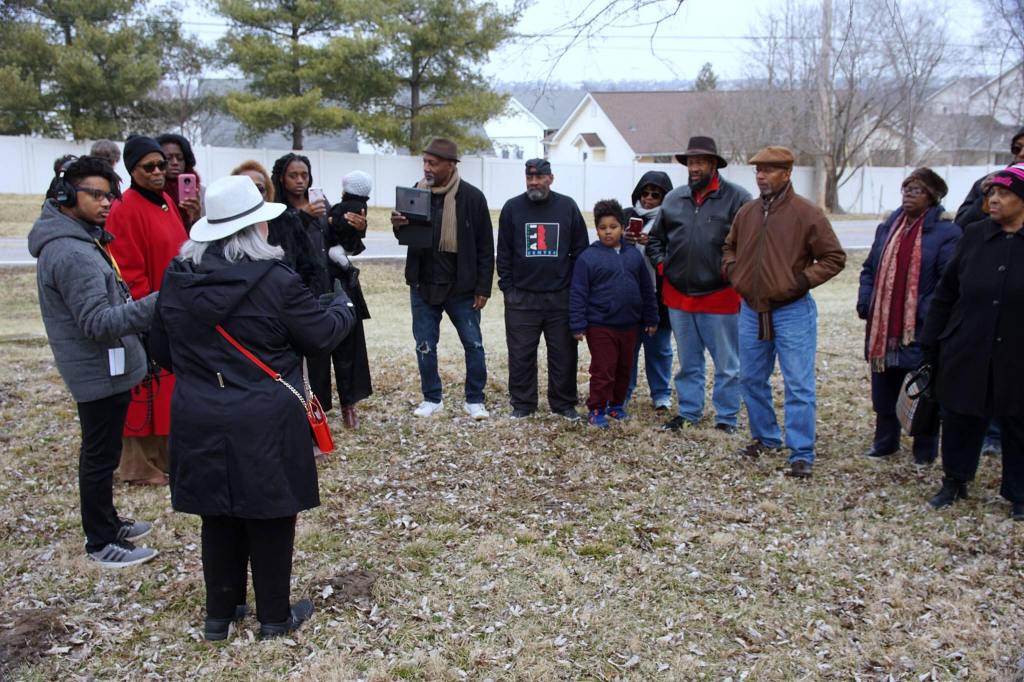
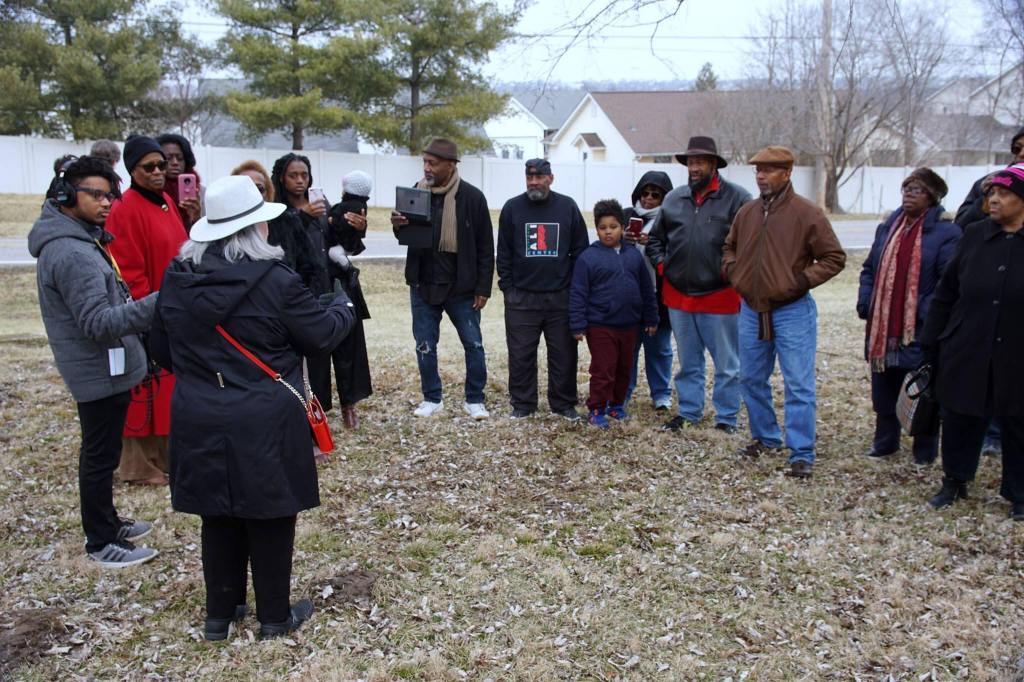
The Emancipation Memorial was dedicated before a crowd of 25,000 people, by a committee that included Fredrick Douglass and other noted African Americans in 1876. It would be only four years later that the formerly enslaved man in Missouri, who had become a national icon, would pass away in St. Louis. After a funeral at his church, an African Methodist Episcopal, he would be buried at a German Evangelical cemetery, in an unmarked grave. Hundreds of graves fill the Common Lot, none of which have markers. The cemetery records reveal that Archer Alexander is laid to rest somewhere among those graves on December 8, 1880, at the age of 74.
When William G. Eliot penned his story of Archer Alexander, sharing the events of the Civil War, he was in his declining years. Written for his grandchildren, his close friend Jesse Benton Fremont, urged Eliot to publish the manuscript. The daughter of one of Missouri’s first Senators, Thomas Hart Benton, and wife of General John C. Fremont, she knew Archer from her childhood in Virginia. However, stories of the turmoil of those days, were difficult to see published, because there were many whose own memories were still fresh. The small book was published by a Boston firm in 1885, and well received. If it were not for the short “slave narrative” which was extremely popular form at that time, we can wonder if we would know the story of Archer Alexander today.
For those who view the Emancipation Memorial in Washington, D.C., there has not been any identity of the man seen with Lincoln given, until recently. Nowhere there does the story of who the man is, or what he did, shared even today. Alexander’s figure, while some see as crouched, kneeling and almost begging; others see a proud figure who is rising because of his hard-earned freedom. In today’s fast paced world, where Google supplies all our research, stories like that of Archer Alexander are needed even more. Everything cannot be learned with a photo, and its’ caption. Fact Checking is an art that requires more than Google. It needs the courage to fall down that rabbit hole and take us wherever the facts lead us. Truth really is stranger than fiction sometimes. It is worth the trouble it takes, and so important for the decisions we make. History happened. It shouldn’t matter who is telling the story, only that it is told right.

TODAY
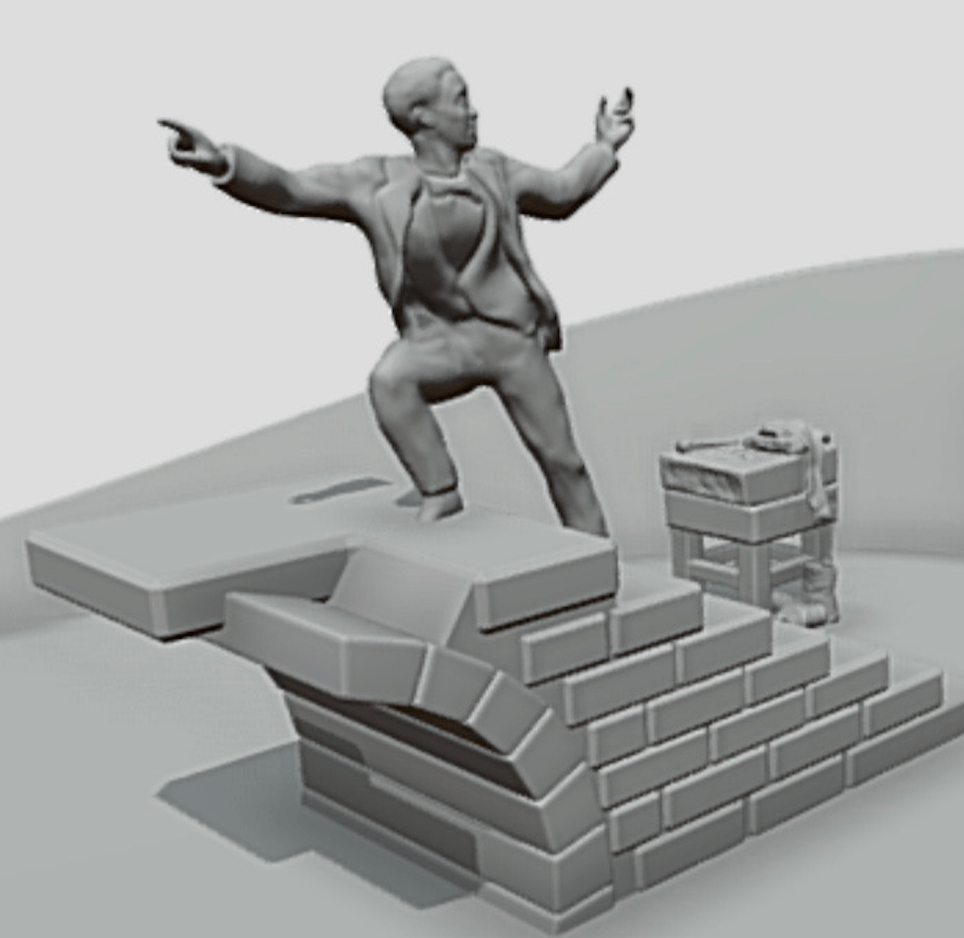
After many discussions, reviews, and thought, Abraham Mohler’s design for a new Memorial at St. Peter’s United Church of Christ Cemetery on Lucas and Hunt in St. Louis, will bring life to this American icon for Emancipation. Rejoicing in his glory of freedom, having left his enslaved life behind, he is truly rising, asking others to follow him once again. Honoring a life well lived, and whose heroism truly sets him apart, Archer Alexander is rendered beautifully in this monument. Please consider going to this link today if you wish to contribute: https://archeralexander.blog/archer-alexander-memorial-3/
 ARCHER ALEXANDER
Leave a comment