“On September 22, 1862, President Abraham Lincoln issues a preliminary Emancipation Proclamation, which sets a date for the freedom of more than 3 million enslaved in the United States and recasts the Civil War as a fight against slavery.
When the Civil War broke out in 1861, shortly after Lincoln’s inauguration as America’s 16th president, he maintained that the war was about restoring the Union and not about slavery. He avoided issuing an anti-slavery proclamation immediately, despite the urgings of abolitionists and radical Republicans, as well as his personal belief that slavery was morally repugnant. Instead, Lincoln chose to move cautiously until he could gain wide support from the public for such a measure.
In July 1862, Lincoln informed his cabinet that he would issue an emancipation proclamation but that it would exempt the so-called border states, which had slaveholders but remained loyal to the Union. His cabinet persuaded him not to make the announcement until after a Union victory. Lincoln’s opportunity came following the Union win at the Battle of Antietamin September 1862. On September 22, the president announced that enslaved people in areas still in rebellion within 100 days would be free.”(1)
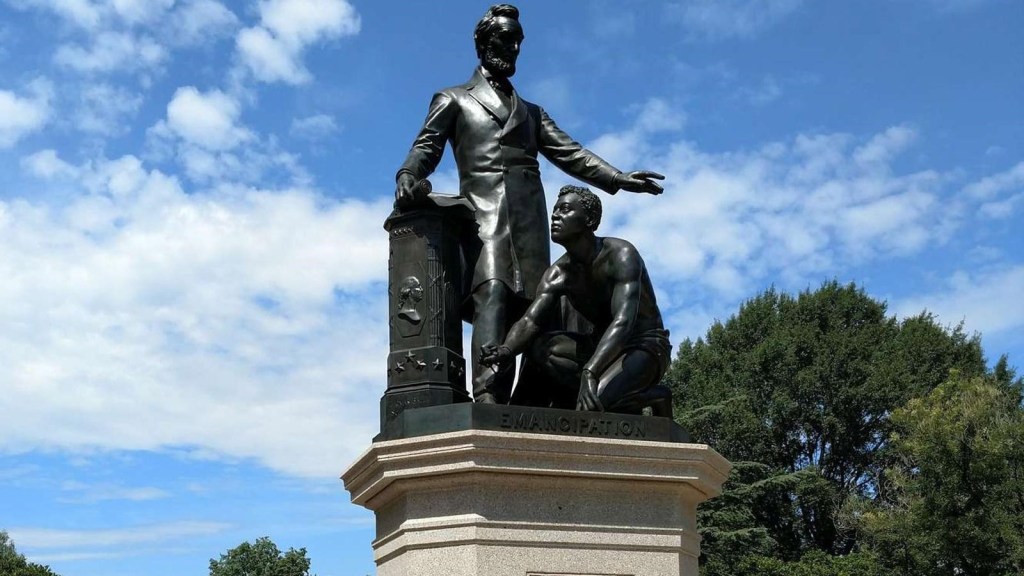
By the 14th of April, 1865, the Civil War had ended, but the hatred by the Confederacy had driven John Wilkes Booth to assassinate Lincoln. But those who had gained their freedom, could never forget.

A formerly enslaved woman named Charlotte Scott in Marietta, Ohio, had sorrowfully proclaimed Lincoln to be “the best friend the colored people had ever had.” She then gave her first money she had ever earned in freedom to erect a monument to their hero.
On April 14th, 1876, on the 11th anniversary of Lincoln’s assassination, thousands of formerly enslaved people, that were now free citizens of this country, honored their hero. President U.S.Grant, was joined by Frederick Douglass, and James Yeatman of the Western Sanitary Commission to dedicate this memorial in Lincoln Park, in Washington, D.C.
(1) https://www.history.com/this-day-in-history/september-22/lincoln-issues-emancipation-proclamation
For more see http://archeralexander.blog

 ARCHER ALEXANDER
Leave a comment