In 1829, a caravan arrived on Dardenne Prairie in St. Charles County, Missouri, consisting of fifty people. Over half of them were enslaved by three of the four families that made up the caravan from Rockbridge County, Virginia. Among them was Archer (1806-1880) and his wife, Louisa (1810-1865), and their children, who had been brought to Missouri by James and Nancy (McCluer) Alexander.
At the same time, an author in Germany would publish a small book about the same area, describing the area and the place that so many families like the Alexanders, the Boone’s, and the Campbells had already settled. This book brought thousands of Germans to the U.S. in the next decade and made Missouri, a slave state established in 1821, to soon become a German state in America. When the Civil War began, over fifty-percent of the population was foreign-born, and the Germans were the largest ethnic group. They would be staunch abolitionists, Union soldiers, and would fight for freedom for all.
By 1863, Archer Alexander was enslaved by a Confederate soldier, Richard H. Pitman, the grandson of a Revolutionary War patriot. Archer’s wife was enslaved by a Confederate and local merchant named James Naylor, who lived a few miles west on the Boone’s Lick road. One night, Archer would overhear the area’s Confederate men plotting to undermine the nearby North Missouri railroad bridge, where a Union fort manned by Missouri’s Home Guards had been built. This was a vital link for the Union troops, transporting hundreds of troops, supplies, and funds to the Union troops further west.
Archer bravely chose to risk his and his family’s lives to inform the Union troops of what was about to happen. The area’s Confederates were angry and searching for the informant who had thwarted their plans. They were about to question Archer when he decided that he had to go for his freedom, “even if he died for it.” He joined sixteen other freedom seekers, also making their way to St. Louis, about fifty miles away, across the frozen Missouri River at Howell’s Ferry, a site listed in 2026 on the National Underground Railroad Network to Freedom.

Archer would reach St. Louis by using the Underground Railroad and be taken in by the abolitionist Rev. William Greenleaf Eliot, a founder of Washington University, who was also a member of the Western Sanitary Commission. With Eliot’s help, Archer would be given his freedom for his actions with the Union Army on September 24, 1863. Archer hired a German farmer to bring his family to St. Louis by the Underground Railroad.
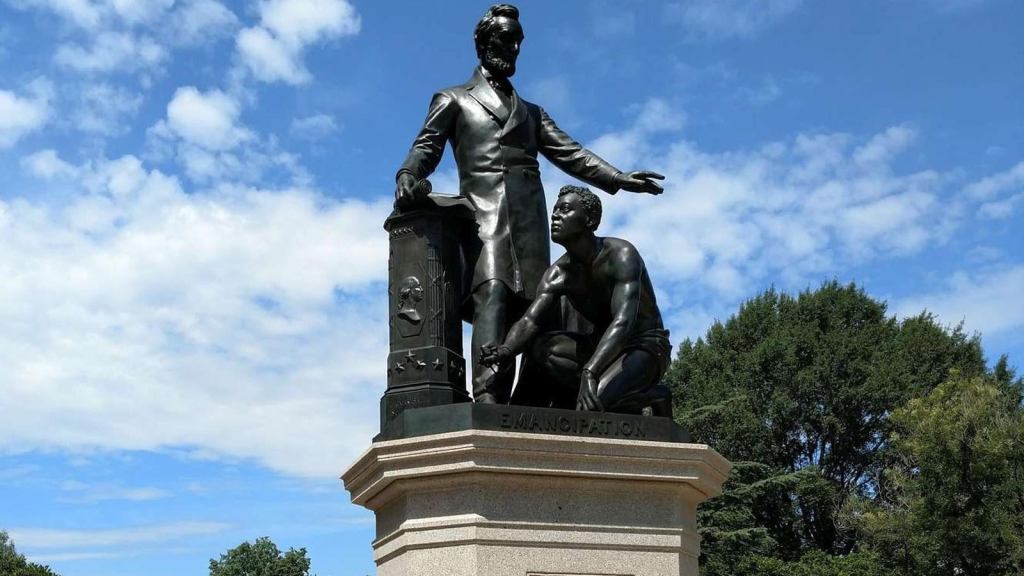
In 1865, when President Abraham Lincoln was assassinated, a formerly enslaved woman named Charlotte Scott called for a memorial to Lincoln, “the best friend the colored people ever had,” and funds were raised for a memorial. With all funds coming from the formerly enslaved and the U.S. Colored Troops, they were helped by the Western Sanitary Commission to dedicate the first monument by the formerly enslaved, called the Emancipation Memorial in Lincoln Park in Washington, D.C., on April 14, 1876.
The sculptor Thomas Ball’s image of a slave is Archer Alexander, who is also the great-great-great-grandfather of Muhammad Ali. All of the funds donated for the Emancipation Memorial came from the people whom he had freed! The heartrending image of Archer shows how he had broken his own chains and was rising with his vision of freedom before him because of Lincoln’s Emancipation Proclamation, leaving behind a man barely clothed who had been denied his equal rights for generations. The Memorial is the first and only memorial to President Abraham Lincoln by those whom he had emancipated.
Archer Alexander died less than five years later in St. Louis and was buried in an unmarked grave among hundreds of other unmarked graves. In 2023, his burial was listed on the National Underground Railroad Network to Freedom. Today, the Friends and Family of Archer Alexander are at work to raise funds for a new memorial by sculptor Abraham Mohler of St. Louis to be placed at St. Peter’s U.C.C. Cemetery that honors the memory of Archer Alexander, leading his people to join him in freedom.
 ARCHER ALEXANDER
Leave a comment