Civil War
-
September focuses on those who chose to refuse enslavement of people, either of themselves or of others. The National Park Service program, enacted by Congress in 1998, began listing documented sites, programs, and resources for those researching the Network to Freedom, also known as the Underground Railroad. “This program honors, preserves and promotes the history of…
-
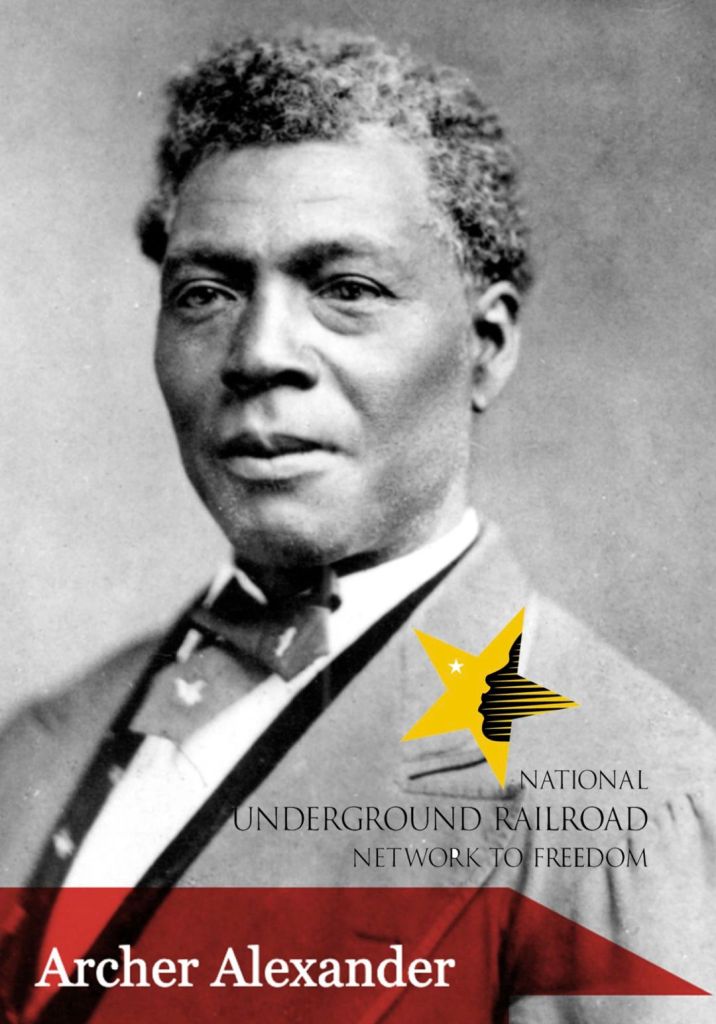
During the Civil War, after overhearing the area Confederates plotting, he risked his life to inform the Union soldiers at Fort Peruque of a plan to destroy the vital railroad bridge…
-

September is National Underground Railroad Month. Archer Alexander, the Last Fugitive Slave in Missouri, was an enslaved hero of the Civil War who was given his freedom by the Union Army for his services. In 1863, he overheard the Confederates plan to destroy a local North Missouri Railroad bridge, which would have killed hundreds of…
-
The public is invited to a Memorial for Archer Alexander (1806-1880) the last fugitive slave of the Civil War who is buried in an unmarked grave in St. Louis…
-
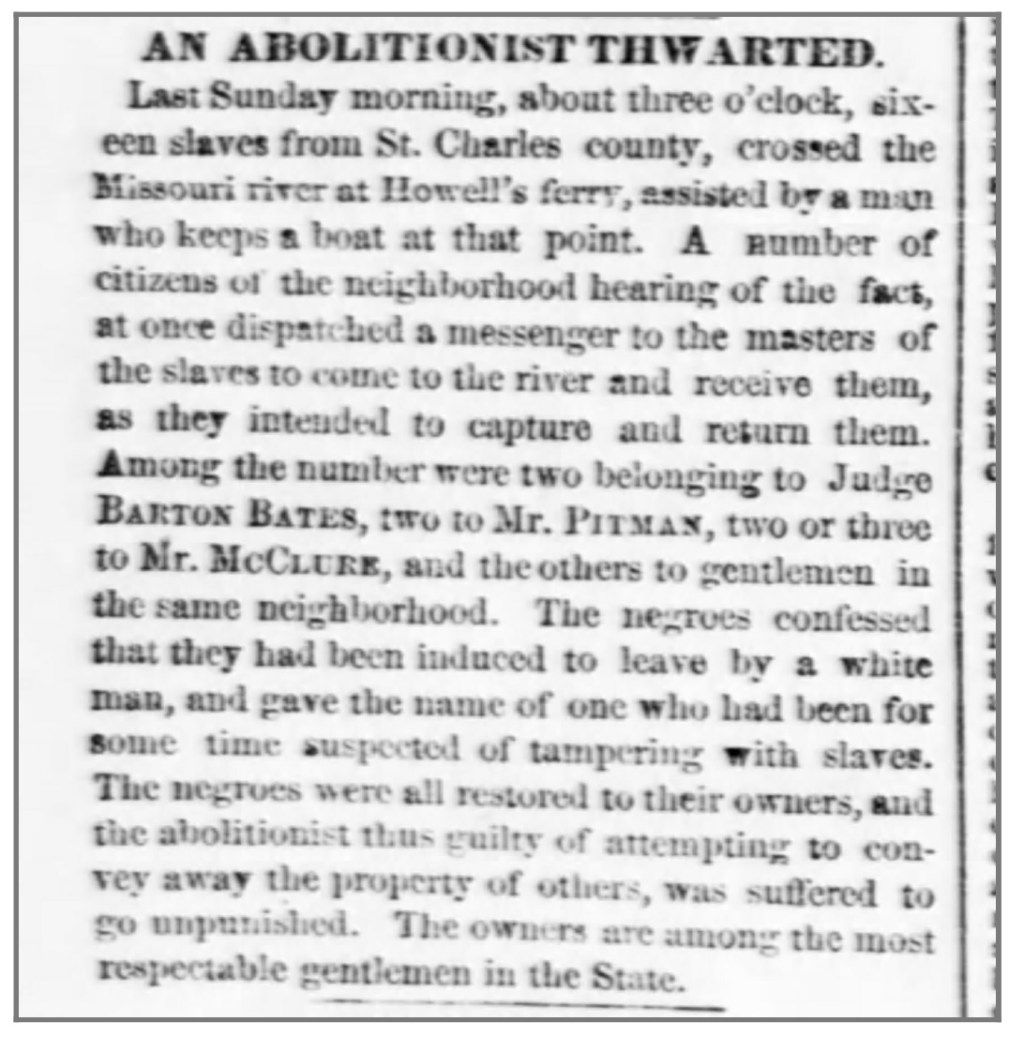
In February of 1863, on a frigid Sunday morning at 3:00 am, sixteen men attempted to make their way across an ice-blocked Missouri River in search of freedom. A local abolitionist, a German immigrant, had stowed a boat near the local ferry crossing, named Howell’s Ferry, for them to use.
-
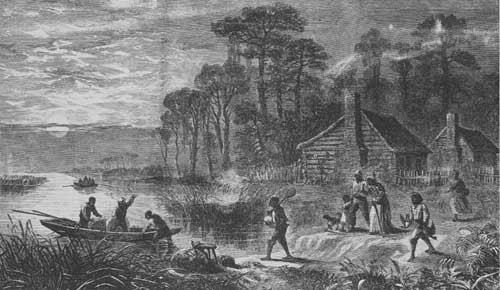
The discovery that Archer Alexander had been the informant who had passed information to the Union Troops about the Confederate’s plans, sent the whole area around Dardenne Prairie into turmoil! While the trains were halted, and the bridge repaired, everyone from Flint Hill to Naylor’s Store to Cottleville was looking for Pitman’s enslaved man….
-
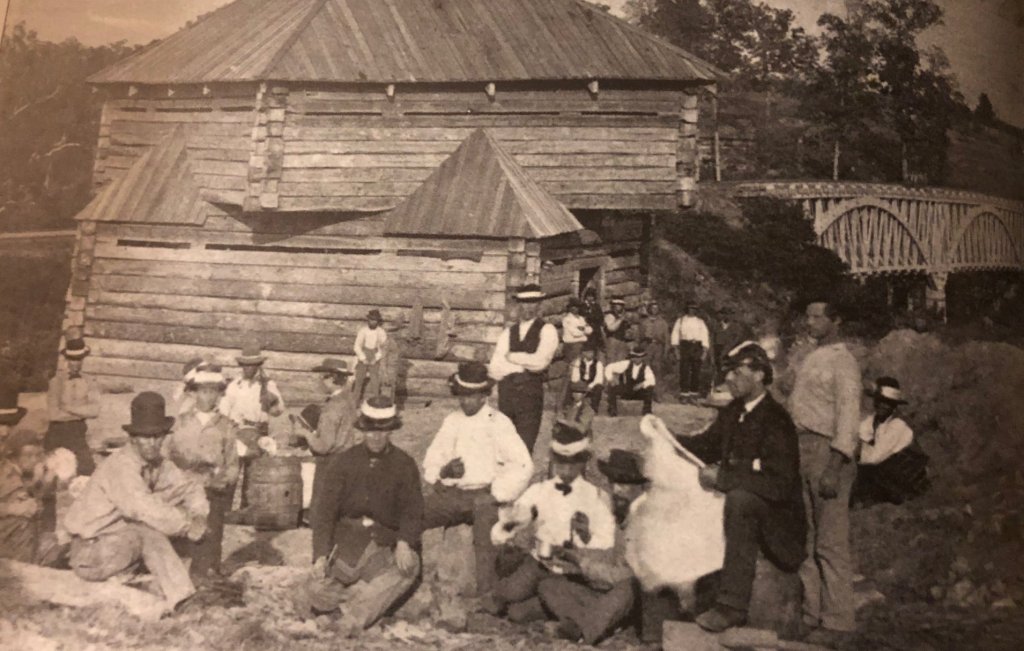
In February 1863, a freedom seeker named Archer Alexander would overhear the local Confederate men in the area, discussing their plans to destroy the Peruque Creek Railroad Bridge. They had been sawing the timbers of the huge wooden trestle, which served as a vital link for the Union Army, carrying troops, supplies and funds across…
-
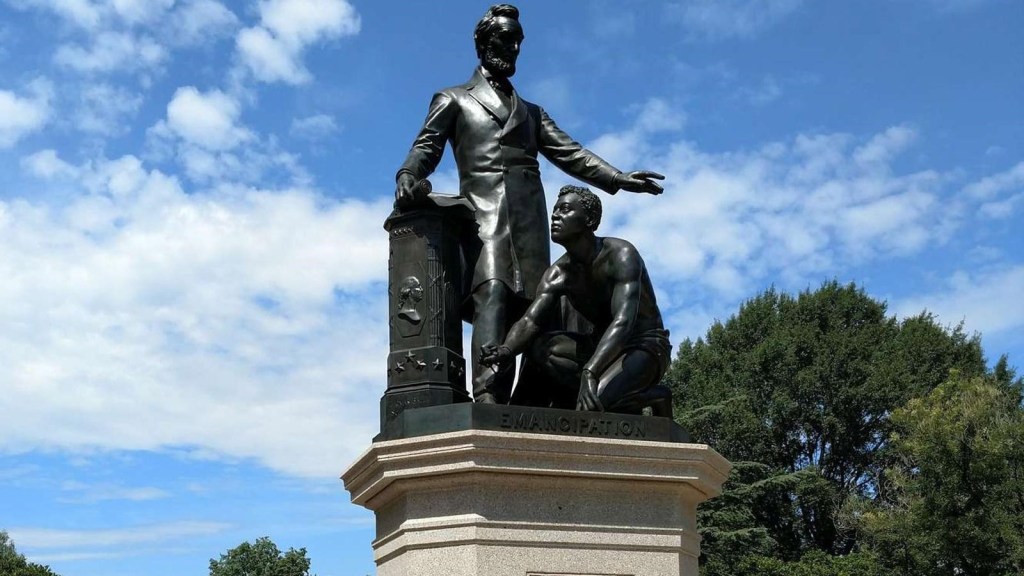
Lincoln’s Emancipation Proclamation declared all enslaved people shall be considered free on January 1, 1863. When Lincoln was assasinated on April 14, 1865, a memorial to Lincoln was erected paid for and dedicated in Washington, D.C. by the formerly enslaved. The enslaved man seen rising is Archer Alexander, the National Icon for Emancipation.
-
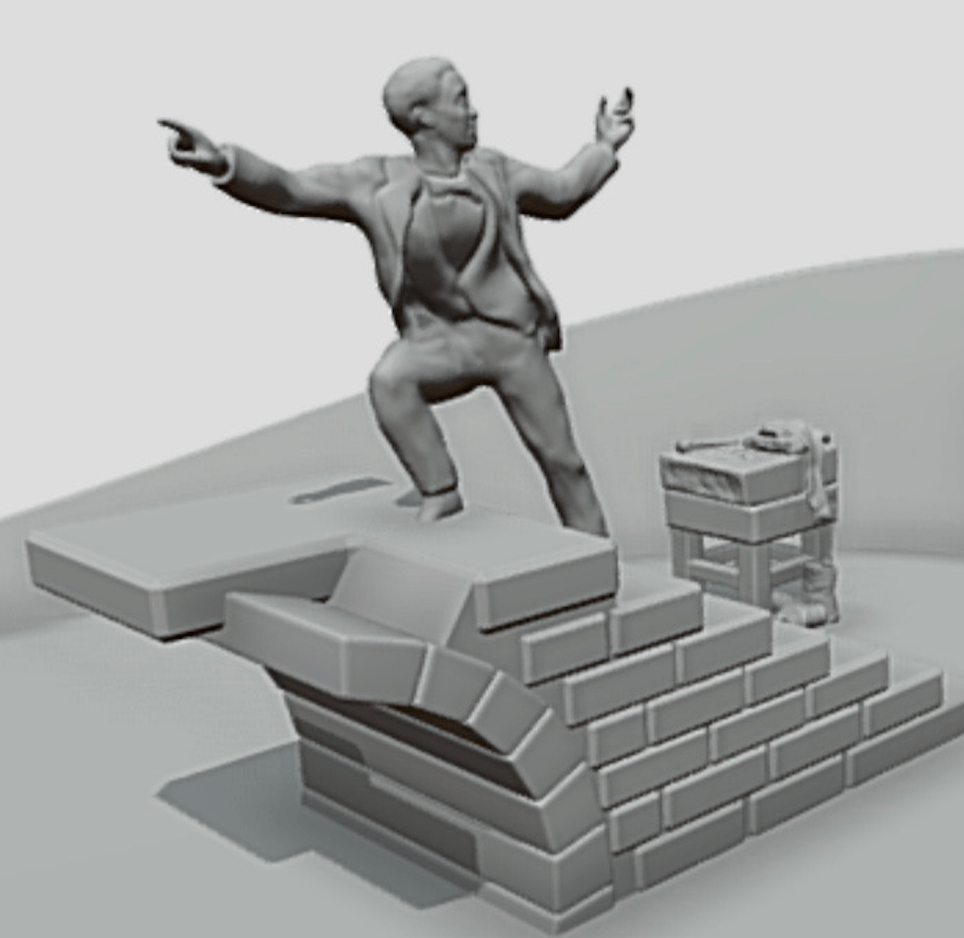
Since then, the talented sculptor Abraham Mohler has been chosen to create this memorial, that is way past due. After many discussions, the Archer Alexander Memorial will depict this man who not only resisted enslavement but was a leader among his people. Future generations will come to know the story of this real hero. His…
-
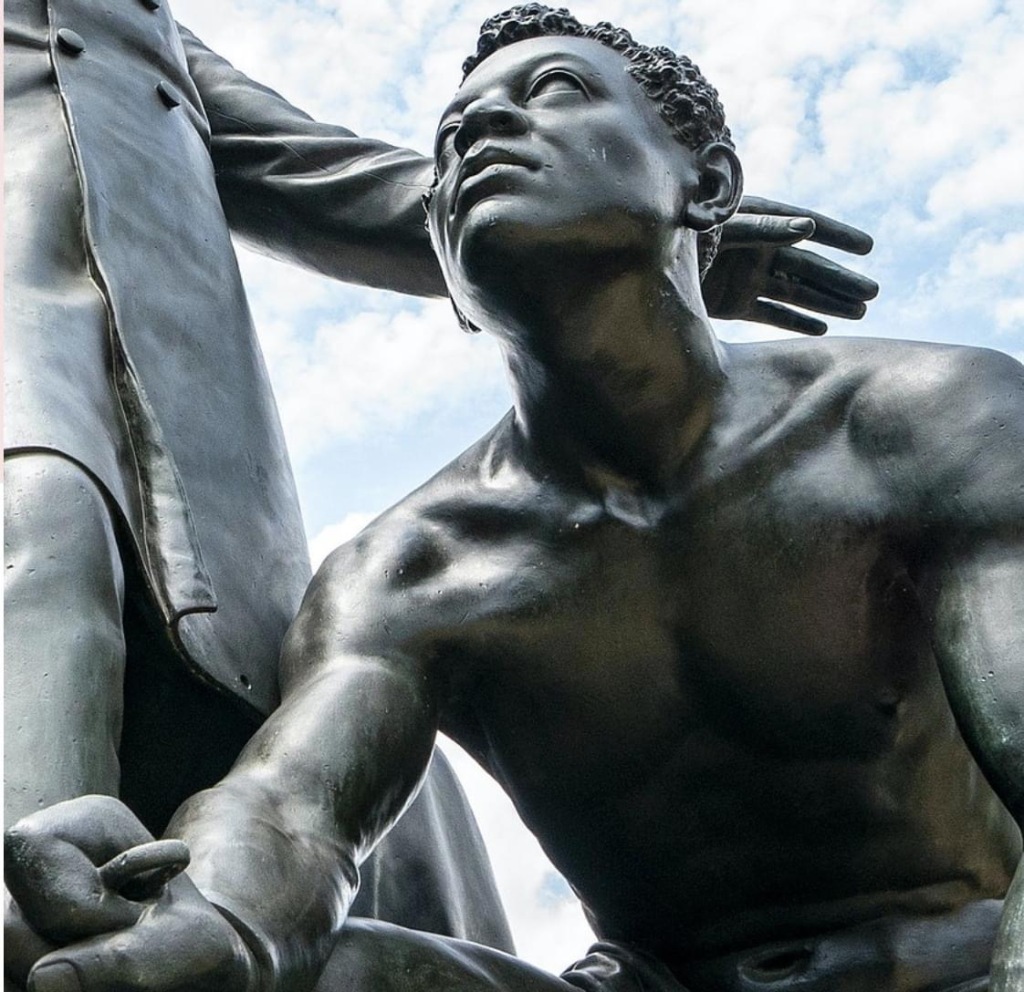
Look closely at the look on Archer Alexander’s face. Have you seen this memorial before? It was dedicated in 1876, with over 25,000 black people attending and its original name is the Freedom Memorial. It was entirely paid for by thousands of formerly enslaved black people.
-

A recent entry in the Virginia Humanities’ Website Encyclopedia Virginia shares the story of Archer Alexander. The contributor is Dorris Keeven-Franke who is an award-winning author of books on Missouri history