
Staid next day to rest our horses and selves, it being Sunday...*
Its’ September 20th if its Sunday … These travelers have been on the road for one whole month now… they have traveled over 350 miles of rugged terrain. They began on…
August 20, 1829… “I travel in company with four families containing about 50 individuals, white and black. The first family is that of Dr. Robert McCluer, his wife (my sister) and five children from six months to thirteen years old and fourteen negro servants, two young men, McNutt and Cummings, and myself form a part of the traveling family of Dr. McCluer. Dr. McCluer leaves a lucrative practice and proposes settling himself in St. Charles County Missouri on a fine farm which he has purchased about 36 miles from St. Louis. The second family is that of James Alexander, who married a sister of Dr. McCluer, with five children and seven negro slaves. Intends farming in Missouri. Third family, James Wilson, a young man who is to be married this night to a pretty young girl and start off in four days to live one thousand miles from her parents. He has four or five negroes. Fourth family, Jacob Icenhaur, an honest, poor, industrious German with seven children and a very aged father in law whom he is taking at great trouble to Missouri, to keep him from becoming a county charge. He has labored his life time here and made nothing more than a subsistence and has determined to go to a country where the substantial comforts of life are more abundant. Our caravan when assembled will consist of four wagons, two carryalls, one barouche and several horses, cows..“

These travelers would not forget their religion as they traveled from Virginia to Missouri. A caravan of 53 people, with nearly half of them enslaved, most would consider it a day of rest. The Campbells, McCluers and Alexanders were all devout Presbyterians. Many of them, or their parents had served as Elders in their church in Virginia. Their religion was packed, carried and brought along and considered just as important as the feather ticks, blacksmith tools, and slaves. Sunday was considered a day for rest for most of them.
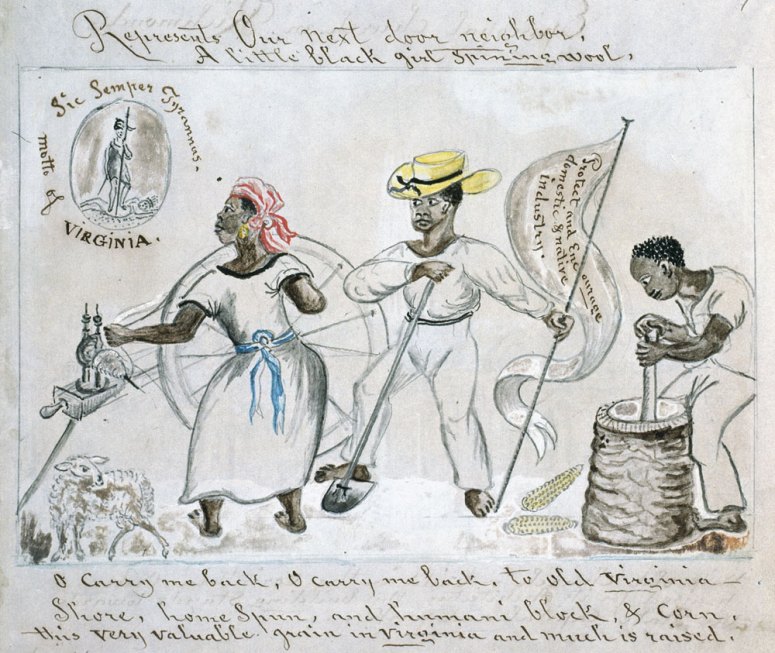
Half of the people making this journey are enslaved people. While the horses were rested, the meals still needed to be cooked, and babies were still nursed, while a carriage seat got repaired, all by the enslaved. The enslaved people would develop their own way to fulfill their spiritual needs, in songs and dance. Laws forbid marriage of slaves. Their ceremony, often referred to as “jumping the broom” solidified the act for the couple. And while Archer is the property of the Alexander family, his wife Louisa, who was born property of the McCluer family, was now owned by James Alexander, by right of his marriage to the former Nancy McCluer, daughter of John McCluer and Agnes Steele, as her dowry [property].
*This is the journal of William Campbell (1805-1849) leading four families from Lexington, in Rockbridge County, Virginia to St. Charles County Missouri, written in 1829. There are 55 people in this caravan, 25 of which are enslaved. Among the enslaved is Archer Alexander.\This journal is located in the collections of the Leyburn Library, Special Collections and Archives, located at the Washington and Lee University, in Lexington, Virginia, and for which we are deeply indebted to Lisa McCown. Editor and author is Dorris Keeven-Franke. The next journal entry is September 22, 1829…https://archeralexander.blog/2023/09/22/22-september-1829/
ARCHER
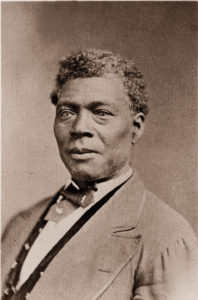
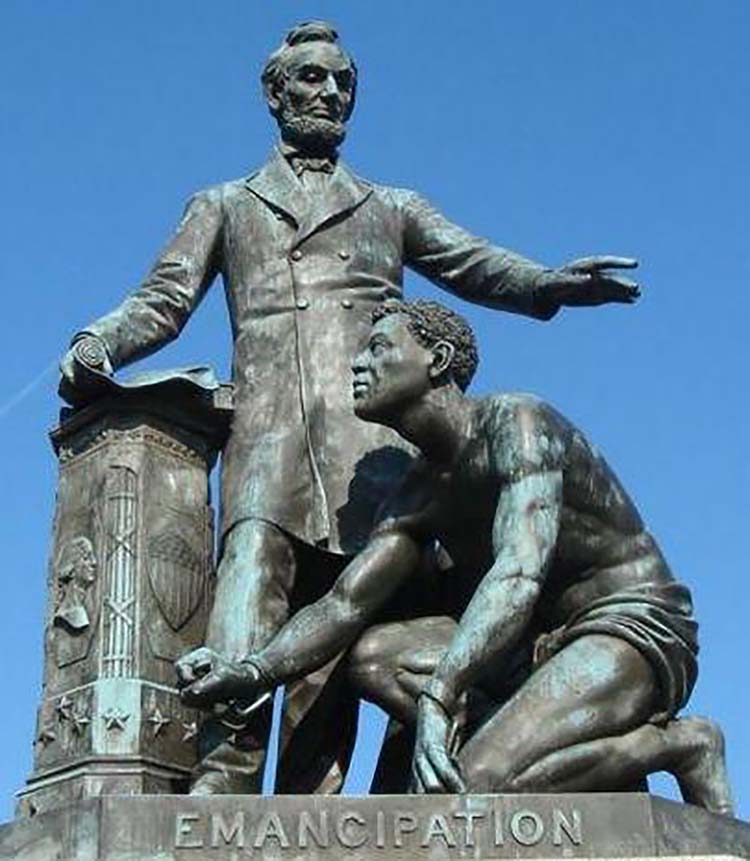
Archer Alexander, a freedom seeker enslaved in St. Charles, Missouri, was first captured in February 1863 when sixteen men made their attempt for freedom at Howell’s Ferry on the Missouri River. Running for his life, as he had overheard his enslaver Richard H. Pitman, and other area men, plotting to destroy a vital railroad bridge nearby and had informed the Union Troops. Escaping, he made his way to St. Louis and the home of an abolitionist named William Greenleaf Eliot, founder of Washington University, where his enslaver attempted to recapture him. As Missouri was under Marshall law, following a military investigation he was granted freedom, by September 24, 1863, through the provisions of Lincoln’s Second Confiscation Act. In 1865, when President Lincoln was assassinated, a fund for a memorial to Lincoln was initiated by Charlotte Scott. The Western Sanitary Commission assisted the formerly enslaved with this and requested the image of the enslaved man be that of Archer Alexander. The Emancipation Memorial was dedicated on April 14, 1876, in Washington, DC’s Lincoln Park. On December 8, 1880, seventy-four-year-old Archer Alexander passed away, and was buried in an unmarked grave in St. Peters United Church of Christ Cemetery in St. Louis, Missouri. Archer Alexander is the great-great-great grandfather of Muhammad Ali.

 ARCHER ALEXANDER
Leave a reply to Entry 25 – 20th September – ArcherAlexander.blog Cancel reply