After Archer Alexander reported what he had overheard to the Union Troops at the Peruque Fort, the entire county was in an uproar. He had risked his life to let them know that the Confederates were about to destroy the most important railroad crossing in Missouri. If captured, he would be tortured, whipped and probably killed. Yet the only way to avoid that was to flee on the Underground Railroad. In 1850, the Fugitive Slave Act insisted any slave captured be returned to their owner. Their terrible fate afterwards is seldom recorded.
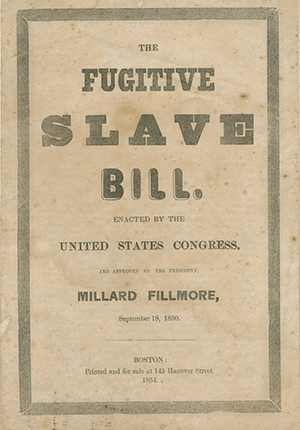
Law enforcement officials were required to arrest people suspected of escaping enslavement on as little as a claimant’s sworn testimony of ownership. The Commissioner before whom the fugitive from slavery was brought for a hearing was compensated $10 if he found that the individual was proven a fugitive, but only $5 if he determined the proof to be insufficient. In addition, any person aiding a fugitive by providing food or shelter was subject to six months’ imprisonment and a $1,000 fine. The Act was broadly condemned in the North and prompted multiple instances of violent resistance. Although the Supreme Court upheld Congress’s power to pass such laws in Prigg v. Pennsylvania, Northern states resisted enforcement of the law on their soil. Wisconsin, for example, invoked the compact theory of the Constitution and insisted it retained the right to “nullify” what they believed was an unconstitutional law. [https://constitutioncenter.org/the-constitution/historic-document-library/detail/the-fugitive-slave-act-1850]
What choice did he have? On a cold February night Archer Aleander and sixteen other enslaved men would run for their lives, across the frozen Missouri River. Their enslavers were owners of many people, families often from Virginia and Kentucky that they had grown up with, and had been born to women they owned. They had lived on Dardenne Prairie their entire lives, on the plantations of the McCluer, Bates and Pitman Plantations, and others in the surrounding area.
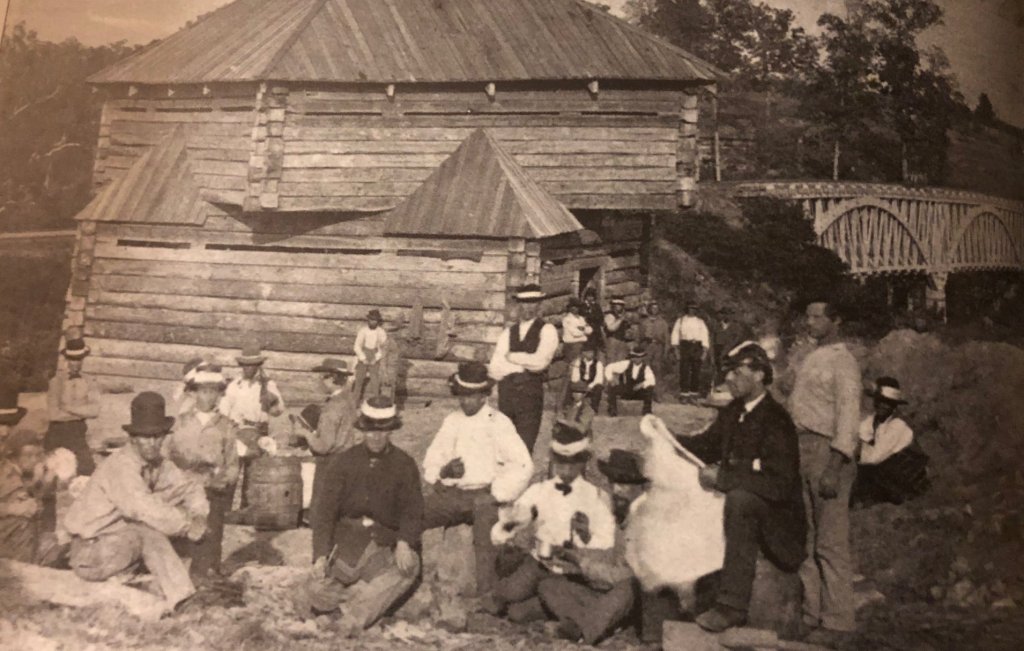
Peruque Fort had been built and completed by Union Home Guards in November of 1862. The trains that passed on the North Missouri Railroads, were loaded with Union Troops, supplies, and payroll. Missouri was a border state, a slave state that was under Martial Law and held by Union Troops. The Fort’s Union troops were men from the surrounding area, who also manned a huge encampment at Cottleville called Camp Bates. They were all men who had emigrated with their families from Germany beginning in the 1830s. They were abolitionists who aided the freedom seekers in any way they could, and also risked imprisonment for helping them. Even if they were Union Troops.
During the Civil War the greatest threat to the Union were Confederate Bushwackers who would undermine the railroad by destroying the bridges. The bridge over the Peruque River in Dardenne Township, west of O’Fallon, was a wooden trestle that crossed a huge gorge with the river in its bottom. As it was winter, the cars with troops would have had woodstoves heating them, which would have caught fire when the train crashed below. And if anyone survived the crash, the area Confederates had guns and amunition stored nearby in the icehouse of Captain James Campbell.
The fort was located where 1055 Peruque Crossing Court in Lake St. Louis is today. The footprint, cemetery, and cistern can still be found today. The North Missouri Railroad became the Missouri Pacific, and still passes the historic site each day. For more about Archer Alexander see https://archeralexander.blog/ or subscribe to the blog and get email notifications when posts are made.
The photo below is Peruque Fort with the Home Guards identified by their white headbands.


Leave a Reply